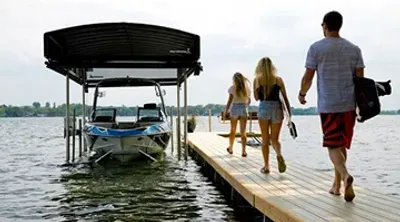













You finally have the lake house. Now you're staring at an old dock and a lift that came with the property, and you're wondering if any of it will actually hold your boat.
That's one of the most common calls we get at Omaha Marine Center in Omaha, Nebraska. A lot of lake homes around here come with docks and lifts built for a different era of boating, when boats were smaller and lighter. The setup looks fine from the deck. Then the new boat shows up.
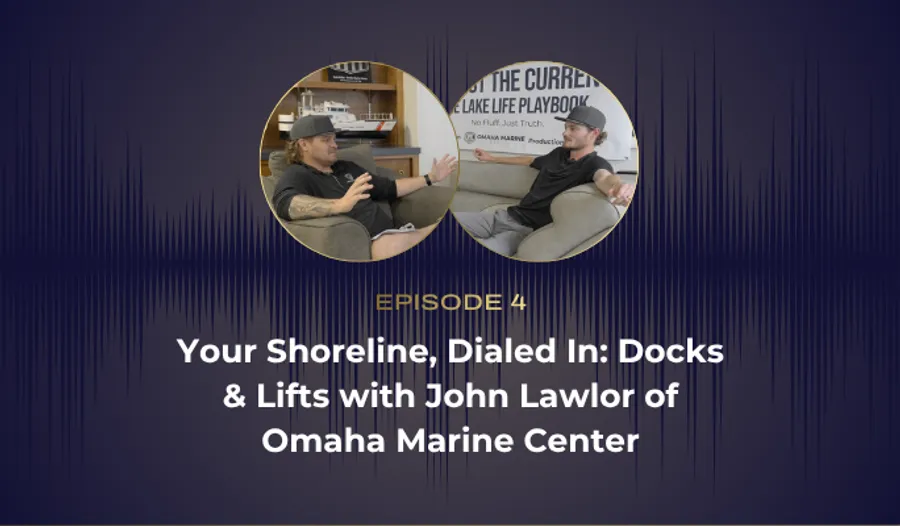
On our podcast, Against the Current: The Lake Life Playbook, hosts Ryan Huber and Brandon Merkel sat down with John Lawlor, our Dock and Lift Specialist, to talk through what new lake owners should check first. John has spent about 25 years building our dock and lift business. Today we're a ShoreStation Platinum dealer, one of the top 10 in the country by volume, and ShoreStation sends customers from all over the country to us for parts.
We recently worked with a customer who bought a home on a private lake that came with a dock and lift. They assumed their wake boat would work on it. The lift turned out to be an older, narrow 3,000 lb model built for a small fishing boat. We helped them sell the old lift on Facebook Marketplace, then sold and installed a new lift sized right for their boat. It can also be converted for several styles of boats if they make a change down the road.
This post is for anyone who just bought a lake home, is about to buy a bigger boat, or wants to know if their current setup is worth fixing. You'll learn the eight problems we see most, what each one costs you if you miss it, and how to get ahead of it before boating season. Listen to the full episode on Spotify or watch it on YouTube.
Key takeaways
- Check your lift's weight capacity against your new boat. Older lake homes often have 3,000 lb lifts, and a 22 ft wake boat can weigh around 6,000 lb.
- Older dock slips are often 10 to 11 feet wide. A modern ShoreStation lift needs about 11.5 feet.
- Freestanding lifts and fixed docks need at least 3 to 3.5 feet of water and no more than about 9 feet. Deeper water usually means a floating dock.
- On a 5,000 lb lift, a hydraulic solar model runs about $2,000 to $2,500 more than an electric direct drive. It's about 5 times faster and carries a 15-year cable warranty. Our most popular hydraulic lifts run $17,000 to $25,000 installed.
- Plan on about 6 weeks from first call to install, and order in winter. Waiting until May or June usually means a long wait.
1. Is the old boat lift strong enough for my new boat?
Often it isn't. Many older lake homes have boat lifts rated around 3,000 pounds, and a modern 22-foot wake boat can weigh about 6,000 pounds. Check the lift's rated capacity against your boat's actual weight before the boat ever goes on it.
John says this comes up all the time. Someone buys a house, sees a lift on the shore, and assumes the problem is solved. Then they buy a bigger, heavier boat than the one the lift was built for. That's why we ask about your lift while we're talking about your boat. Catching it early saves you from a surprise in May.
Think past the boat you own today, too. John always asks customers about their long-term plan. You might have a 19-foot ski boat now and want a 24-foot tritoon with a big motor in a few years. If that's the plan, the lift you buy today should be ready for it.
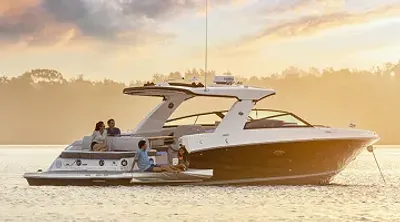
What type of boat you have matters as much as the weight. A traditional inboard, a surf boat, and a tritoon each need different bunks, stops, and guides. ShoreStation makes components for each style, including heavy-duty bow stops, spring-loaded centering guides, motor stops, and glide rails for pontoons.
Here's a recent example. A customer was shopping for a lift for his 19 ft bowrider, which would normally call for a 4,000 lb lift. When we asked about his plans, he told us he wanted a 23 ft tritoon with a 200 hp motor someday. So we steered him to a 5,000 lb lift now. It handles the bowrider today and converts easily to the bigger pontoon later.
2. Will a new boat lift fit in my existing dock slip?
Measure before you buy. Older U-shaped dock slips are often only 10 or 11 feet wide, and a modern ShoreStation lift is about 11.5 feet wide. A slip that's too narrow means the new lift won't fit without changing the dock.
Lift width matters on its own, too. ShoreStation lifts come in different widths, including 108 inches and 120 inches. John sees a lot of tritoon owners shopping 108-inch lifts without knowing those are too narrow for three tubes. Tritoons generally need the 120-inch width.
It's an easy mistake to make, especially when you're comparing listings online. If you're not sure what you have, measure the inside of your slip and send us the numbers along with your boat's make and model.
3. How deep does the water need to be for a boat lift or dock?
Most freestanding boat lifts need at least 3 to 3.5 feet of water and no more than about 9 feet at the back of the lift frame. Fixed aluminum docks top out around 8 to 9 feet. If your water is deeper, or the level rises and falls a lot, a floating dock is usually the better fit.
Depth is the one thing you can't change, so it decides a lot. Our hosts have seen owners with floating lifts in 20 feet of water ask for a hydraulic ShoreStation because a neighbor has one. The speed is great, but a freestanding lift won't work at that depth.
At Omaha Marine Center we carry two kinds of docks:
| Dock type | Material | Section sizes | Best for |
|---|---|---|---|
| ShoreStation fixed dock | Aluminum with galvanized steel frames and adjustable legs | 4x8, 6x8, 4x10, 4x12 | Water up to about 8 to 9 feet; feels solid underfoot |
| Connect-A-Dock floating dock | Durable poly resin, modular | 4x8, 6x10 | Deeper water and sandpit lakes where levels change a lot |
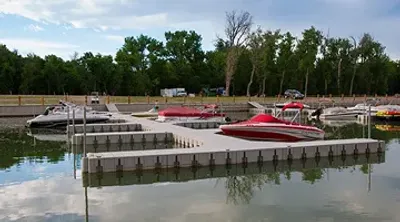
Both systems are modular, so you can build U-shaped slips, L shapes, or sections side by side. John likes the fixed aluminum dock for families with older guests because it feels like walking on a sidewalk. We don't sell steel-frame docks with floats, but we're happy to refer you to someone in the Omaha market who does.
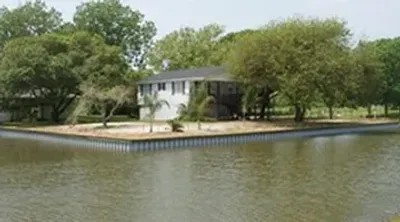
Around Omaha, we see a few different depth situations. The most common is a beach where the water gets gradually deeper. Some lakes are too shallow and need dredging before a boat can get on and off a lift. Others drop off sharply right off the beach and need deep water extension legs at the back of the lift frame. On lakes with a lot of seawalls, the water can be deeper right off the wall, which may call for a special deep water frame.
4. Why is my boat lift so slow, and is a hydraulic lift worth it?
If your lift is painfully slow, it's probably an electric direct drive, which winds a cable around a spool. A hydraulic solar lift moves about 5 times faster, doesn't wear the cable, and comes with a 15-year cable warranty from ShoreStation. On a 5,000 lb lift, expect to pay about $2,000 to $2,500 more for hydraulic.
| Lift type | Speed | Cable wear | What to know |
|---|---|---|---|
| Manual crank | Slowest, by hand | Low | Cheapest option, now under 5% of what we sell |
| Electric direct drive | Slow | Cable spools and frays over time | Most brands use a similar generic motor; ShoreStation no longer makes one |
| ShoreStation hydraulic solar | About 5x faster than direct drive | None from spooling | 15-year cable warranty; about $2,000 to $2,500 more on a 5,000 lb lift |
The cable is the big issue with direct drive. Because it winds and unwinds every trip, it wears out no matter the brand. As John put it on the episode, "you almost have to assume that your cable's gonna snap about every five years." A hydraulic lift pulls the cables with hydraulic rams instead, so the cable doesn't wear the same way.
Speed changes how often you go out. According to John, ShoreStation's research found people use their boat about 60% more when the lift goes up and down quickly. For a lot of older couples, the thought of cranking a wheel or waiting on a slow lift is enough to stay home. We've seen it firsthand. One older couple went from not using their pontoon at all to being out every evening after switching to a hydraulic lift.
It matters on a busy lake, too. On a choppy summer weekend, getting into the lift and up out of the waves fast is worth something. One of our hosts keeps a pontoon on an old direct drive lift, and after a long day on the water the family sometimes just beaches it and deals with it later. That's not great for the boat.
John learned this one himself. He ran an electric direct drive lift for 10 years before he "finally gave in to my own sales pitch" and switched to hydraulic. His lift now goes up in a few seconds, and he wishes he'd made the switch from the start.
Why it matters that the hydraulics sit above the water
On ShoreStation lifts, the hydraulic motor, reservoir, and battery all sit in one box above the water. Open the box and everything is right there. Newer lift tubes also have caps you can remove to see the rams and cables inside.
Some competing brands put the hydraulics underwater. If those break, finding someone willing to dive in and fix your lift is tough. Around Omaha, there are also 4 or 5 service groups that can install and repair ShoreStation lifts, not just Omaha Marine Center. With some other brands, one person services everything, and if he's busy, you wait.
5. Should my boat lift be solar or plugged into AC power?
We recommend solar. With a solar-powered lift, any problem is in the lift itself, so it's quick to diagnose and fix. With an AC lift, the problem could be anywhere between your lift and your breaker box.
We get why people want AC. If you already have an outlet at the dock, using it seems like the cheaper move. The trouble is what happens when you call and say your lift isn't working. John lists the suspects: the dock outlet may have gone bad from water getting in, which they're known for. The wire running to the house could be 50 years old, or a mole may have chewed through it. It could even be a breaker inside the house.
A solar lift takes all of that off the table. It also keeps working during a power outage.
If you're set on skipping the solar panel, there's a workaround. The panel only keeps the lift's battery charged, so you can plug in an inexpensive battery maintainer from an auto parts store instead. Just know you're back to the same wiring questions if something stops working.
On ShoreStation's newer lifts, 5,000 lb models and up run on a 24-volt solar system for more speed. Lifts 4,000 lb and under use a 12-volt system.
6. Is a used boat lift from Facebook Marketplace a good deal?
It can be, but be careful. Over the last few years, the Omaha area has had several storms with winds near 100 mph, including a significant tornado. A good number of lifts from those storms went underwater, got refurbished, and are now listed for sale.
John's warning is simple: "Anything electronic that's been underwater, it might work today, but it's gonna fail at some point." He's seen it happen again and again.
Before you buy a used lift, check these things:
- History. Ask where it came from and whether it's ever been underwater or storm damaged. Treat it like buying a used car.
- Brand. A lot of people call any lift a ShoreStation because the name is so common. Confirm what it actually is.
- Width. Make sure it fits your boat. A 108-inch lift is too narrow for most tritoons.
- Capacity. Match the rated weight to your boat, with room for the next one.
If you're unsure, send us the listing. We're happy to give you a second opinion on whether it will work for your boat.
7. Can I install a boat lift myself?
For docks, yes. For lifts, we don't recommend it. Manufacturers will typically void the warranty unless a certified installer puts the lift in, and you don't want to throw away a 15-year cable warranty to save on installation.
Docks are different. If you want to buy dock materials only, we're fine with that. We'll show you how the sections go together and give you tips.
Lifts are a bigger job than they look. John sees handy customers put a lift together on the beach just fine, and then get stuck. Getting it into the water, leveling it, and handling the heavy motor box side is a different job. A full-size 6,000 lb lift can take about three people on each corner to move. Most DIY attempts end with a call to an installer anyway.
If you know someone who's installed lifts before, talk to us. We'll look at it case by case.
Omaha Marine Center uses trained, certified independent contractors to install our customers' boat lifts. The same crews help us with repairs and warranty work. We're your selling dealer, so we're your first call if anything comes up. We can also help move an old lift or dock out of the way for the new one, and help arrange dredging if you need it.
8. When should I order a dock or lift in Omaha to have it ready for summer?
Order in the winter. Start to finish, a new dock or lift usually takes about 6 weeks, and our install season runs from mid-April to mid-July. If you wait until May or June, everyone is busy and you'll likely wait.
| Time of year | What's happening |
|---|---|
| Winter through February and March boat shows | Best time to plan, pick a layout, and order |
| Mid-April | Installs start once the water is warm enough to work in |
| Mid-April to mid-July | Busiest stretch of install season |
| May and June | Hardest time to order and get a quick install |
| Late July on | Things slow down and turnaround speeds back up |
Here's how the process works with us:
- We talk through what you have and what you want, either at your property or from photos you text us.
- We agree on a layout and pick the materials.
- You pay a deposit, and we order everything.
- We install it, and you pay the balance when the job is done.
Boat lifts can go faster because we keep some in stock. Docks usually have to be ordered because every layout, size, and color is different.
We're scheduling spring lift installs now on a first come, first served basis. If you place an order with a deposit during the winter, we can guarantee your dock or lift for spring install as soon as the ice clears and the weather warms up. If you wait until spring or summer to commit, a 4 to 6 week lead time is common, depending on factory turnaround and whether we already have it in stock.
9. What's the first step to getting my shoreline set up right?
Talk to a dealer that sells and services docks and lifts before you buy anything. A quick look at your shoreline catches most of the problems in this post before they cost you money.
At Omaha Marine Center, John will often come out to your property himself. If he can't get there right away, or you'd rather not wait, text him a photo of your shoreline so he can see what you're working with. Either way, you get an expert's eyes on it before you spend anything.
For docks, John asks for a cocktail napkin sketch. Actually, two of them: your dream layout and a more budget-friendly one. A lot of people have big plans without any idea what a large dock costs. Pricing both versions side by side makes it easy to find the setup that fits your budget.
So what does it cost? Our most popular ShoreStation hydraulic solar lifts, from 4,000 to 6,000 lb, usually run $17,000 to $25,000 installed, depending on the equipment you pick and your type of boat. Our most popular dock layouts average about $1,300 per 8 feet of dock.
Accessories can wait if your budget is tight. Ladders, Shore Steps, bumper guides, lights, and flagpoles can all be added down the road.
Frequently asked questions
Does an aluminum dock get hot in the sun?
Not in our experience. ShoreStation uses a special paint that it says stays cool underfoot, and John says no customer has ever complained about heat. His own brown wood dock at home gets much hotter.
Can I control my boat lift from my phone?
Yes, on newer ShoreStation lifts rated 5,000 lb and up. The Bluetooth app raises and lowers the lift and runs lights and power curtains from up to 100 feet away, and you can pair up to 10 devices. Lifts 4,000 lb and under use a wireless handheld remote instead.
Can I lock my boat lift when I'm away?
Yes. ShoreStation lifts have a lockout feature that uses a key or a password. It keeps family members or uninvited guests from running your lift while you're gone.
What is a ShoreScreen PowerCurtain?
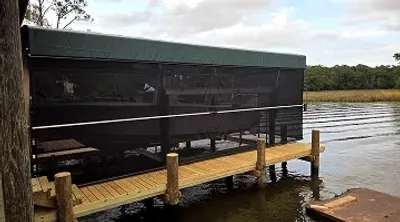
It's a black mesh curtain that raises and lowers electrically around your boat lift, a lot like closing a garage door. It keeps out sun, birds, and spiders, and it runs from the same remote or app as your lift. An aftermarket company also makes a non-powered version that hangs down all the time.
What canopy colors are available for ShoreStation lifts?
ShoreStation offers about six canopy colors, and slate gray and sand beige are the most popular. Aftermarket companies offer more colors and fabrics that fit ShoreStation lifts.
What dock accessories do people use most?
Boat bumper guides that attach to the dock legs are our top seller. Shore Steps are also popular. They cost more, but they'll last a lifetime. Ladders, lights, flagpoles, and gear towers are other common add-ons.
How much does a boat lift cost in Omaha?
At Omaha Marine Center, our most popular ShoreStation hydraulic solar lifts, from 4,000 to 6,000 lb, typically run $17,000 to $25,000 installed. The final price depends on the equipment you choose and your type of boat. Docks average about $1,300 per 8 feet of dock.
Get your dock and lift right before boating season
Most dock and lift problems come down to a few checks: lift capacity, slip width, water depth, power source, and timing. Catch them now and your first summer at the lake is about the water. Miss them and it's about phone calls and waiting on installers.
Winter is the best time to start. You'll have time to plan a layout, compare options, and get on the install schedule before the spring rush.
Omaha Marine Center has a real showroom with posted hours, so you can come see docks and lifts in person and talk with someone who knows them. John also gives every customer his cell number. In his words, "I give all my customers my cell phone, and I don't care when they call me."
John has a story about an older couple on his own lake. They had a pontoon on an old manual crank lift, and they told him they'd quit using the boat because raising it had gotten too hard. He convinced them to switch to a hydraulic solar lift. Now they're out on their pontoon every evening.
Ready to get started? Schedule a shoreline visit with John or stop by our showroom and we'll put together a layout and a price for your property. You can also hear the full conversation on Against the Current: The Lake Life Playbook on Spotify, YouTube, or Amazon Music.
About John Lawlor
John Lawlor is the Dock and Lift Specialist at Omaha Marine Center in Omaha, Nebraska. He started the dealership's dock and lift business about 25 years ago and has helped make Omaha Marine Center a ShoreStation Platinum dealer, one of the top 10 in the country. John was a guest on Against the Current: The Lake Life Playbook, hosted by Ryan Huber and Brandon Merkel.